Written for Operations leaders · Small business owners · Marketing teams
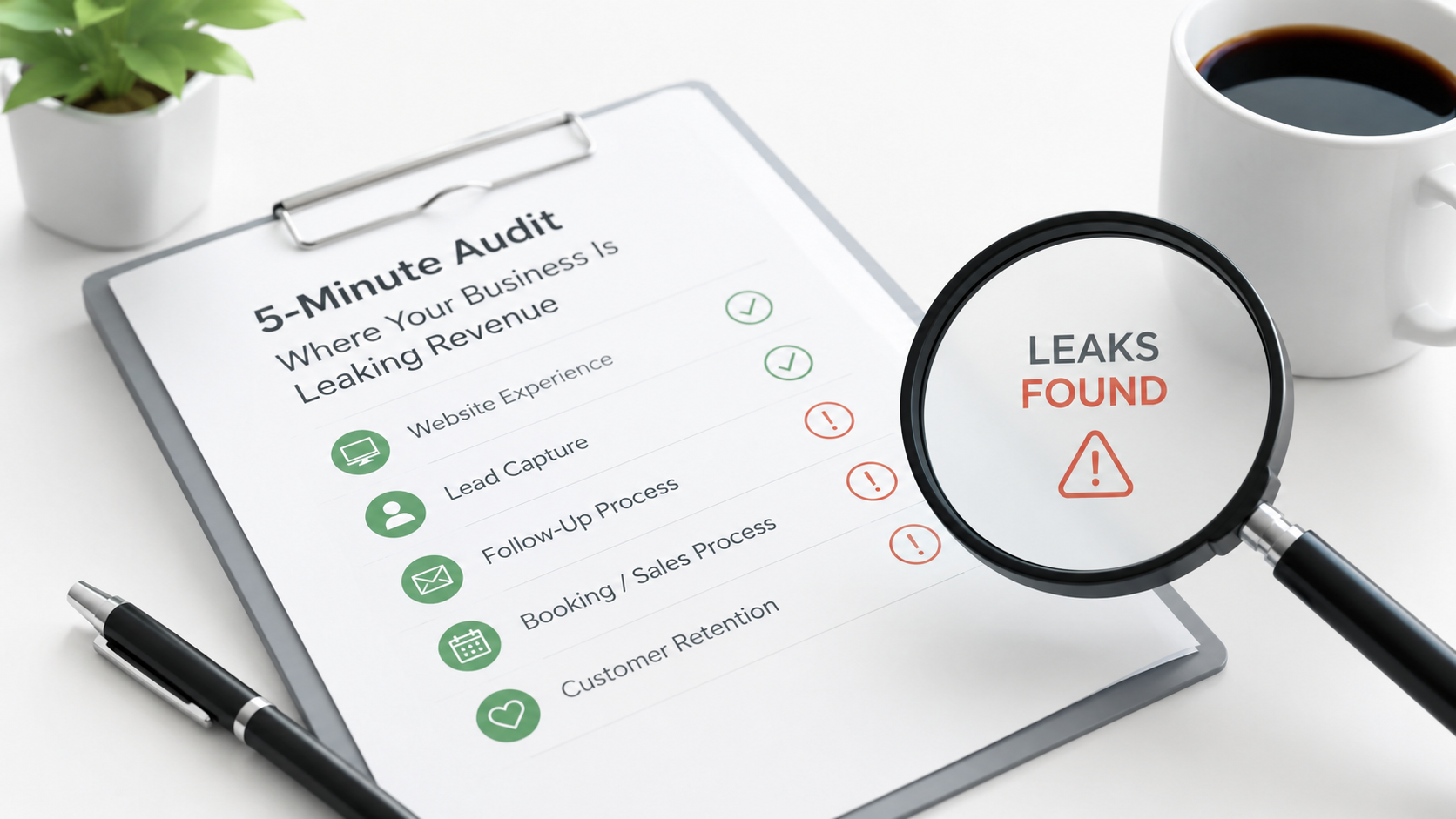
Before you spend another dollar on ads, run this five-minute audit. It usually finds money you already paid for and never collected, most often in lead response and CRM gaps, not in your marketing creative.
Audit 1: Call your own business
Call during business hours, then again after hours. Count how many rings before someone answers, or whether you hit voicemail. Every voicemail is a lead deciding whether to wait for you or call the next name on the list.
Audit 2: Submit your own form
Fill out your website contact form and start a timer. How long until someone replies? If the answer is more than five minutes, you are losing leads to faster competitors every single day.
Audit 3: Review your last 20 estimates
- How many got a single follow-up?
- How many got a second?
- How many simply went quiet with no system chasing them?
Audit 4: Check CRM response times
Pull the last two weeks of inbound leads from your CRM or inbox. Note average first-response time by channel, phone, form, chat, and social. Gaps here predict which channel leaks the most revenue.
Audit 5: Confirm automated first touch
Every inbound lead should get an immediate acknowledgment, even when your team is busy. If that requires manual effort today, an AI receptionist or intake flow closes the gap without adding headcount.
Most businesses lose 40% of their leads to slow follow-up. The fix is rarely more leads. It is a system that catches the ones you already have.
The Revenue Leak Audit Framework
The five-minute audit is not a thought exercise, it is a scored framework. Rate each step from 1 (broken) to 5 (systematized). Any score below 3 becomes a fix ticket this week. Most owners discover the leak sits between the moment a prospect raises their hand and the moment a human responds with a clear next step. That gap is almost never fixed by more ads; it is fixed by CRM and pipeline automation wired to every form, call, and chat entry point.
Scoring the five audit steps
- Call test: answered in three rings, live or routed, not voicemail.
- Form test: auto-acknowledgment under sixty seconds plus human follow-up under five minutes.
- Estimate review: at least two automated touches on open quotes.
- CRM audit: median first-response time visible and under five minutes.
- After-hours: SMS, booking link, or AI intake, not silence until morning.
ZedNova clients average forty percent faster lead response after CRM automation goes live, typically within the first two weeks, before any new traffic arrives. Speed-to-lead is the highest-ROI fix in service businesses because you are monetizing leads you already paid to acquire. If your audit surfaced slow form replies or missing estimate follow-ups, that is where to start.
From audit findings to a closed loop
Document what happens today: which channel gets answered fastest, which rep owns follow-up, and where leads die. Then wire one automation per finding, instant CRM create on form submit, missed-call text-back, estimate sequence. An AI receptionist handles overflow without adding headcount when phones spike during campaigns. Measure median response time weekly; it predicts close rate better than raw lead volume.
You do not have a lead problem. You have a latency problem. Fix latency first.
What to fix before the next ad dollar
If any audit step scored below 3, pause scale on paid channels until the capture loop works. Sending more traffic to a form that replies in four hours is burning cash. Pair the audit with a conversion-focused site review if the form itself is buried or the mobile experience drops calls. The audit takes five minutes; the fixes often ship in days, not months.
Role ownership and weekly rhythm
Assign one owner for speed-to-lead metrics, not a committee. Fifteen minutes every Monday: median response time, count of leads untouched over four hours, and estimates with zero follow-up. Share the score with anyone who touches sales or front desk. Visibility alone often cuts response time because nobody wants to be the bottleneck on the dashboard.
Common failure patterns we see
- Forms email a shared inbox that nobody monitors on mobile.
- Estimates sent as PDF attachments with no CRM task to chase.
- After-hours calls go to voicemail with no text-back.
- Chat widget transcripts never reach the CRM.
- Sales blames marketing for lead quality while response time exceeds an hour.
Each pattern maps to one automation. Fix the inbox problem before debating ad creative. Outbound lead gen only scales when the capture side can respond at the speed the channel promises.
Quantifying the leak
Multiply monthly inbound leads by your average job value by the percentage that went cold from slow follow-up. Example: forty leads, five thousand dollar average, thirty percent lost to latency equals sixty thousand dollars per month in recoverable pipeline, before spending another dollar on ads. The audit is five minutes; the math convinces stakeholders to approve CRM budget.
Track the metric monthly after fixes deploy. Most teams see response time drop within two weeks when notifications and auto-replies go live, proof that the leak was operational, not market demand.
Implementation sequence
Week one: form and call routing to CRM with mobile notify. Week two: auto-acknowledgment email or SMS and estimate follow-up sequence. Week three: after-hours text-back or AI intake. Week four: dashboard review with sales. Do not wait for perfect CRM hygiene, ship routing first, clean data second.
Document SLAs on the wall: under five minutes human touch on inbound leads during business hours, under sixty seconds auto-reply always. When the team hits SLAs for thirty consecutive days, then revisit ad scale.
Share audit scores with your agency or internal marketing team. If they deliver leads but CRM shows multi-hour response times, fix operations before negotiating CPL targets. Agencies cannot close deals your inbox ignores.
When the audit says hire vs automate
If response time fails because volume exceeds two full-time coordinators, automation and an AI receptionist usually cost less than another salary plus benefits. Run the audit quarterly, leaks reopen when teams grow without updating routing rules.
| Fix | Problem | What to change | Metric affected | Tool or platform |
|---|---|---|---|---|
| 1. Mystery call test | Voicemail during peak hours; no after-hours path | Answer within three rings or route to SMS / AI intake | Answer rate + after-hours capture | OpenPhone, CallRail, or AI receptionist |
| 2. Form response SLA | Form replies take hours or never arrive | CRM instant notify + auto-reply under 60 seconds | Median first-response time | HubSpot, GoHighLevel, Zapier |
| 3. Estimate follow-up sequence | Quotes sent once with no chase | Two-touch sequence at 48h and 5 days with clear CTA | Estimate-to-close rate | CRM workflows + email/SMS |
| 4. Channel response audit | Fast on phone, slow on chat or social | Unified inbox; same SLA for every inbound channel | Response time by channel | CRM unified inbox |
| 5. Weekly leak review | No owner for response metrics | 15-minute weekly review of speed-to-lead dashboard | Leads contacted under 5 min (%) | CRM reports + GA4 |
Frequently asked questions
A revenue leak is money you already paid to earn but never collect, usually because a lead raised their hand and no one responded fast enough, or no system chased them. It is rarely a marketing problem. It is a follow-up gap.
Under five minutes. Studies consistently show that lead qualification drops sharply after the first five minutes. If your contact form replies take hours, faster competitors are taking your leads every day.
Connect every form to a CRM that notifies a human instantly and auto-sends a first reply. Add an after-hours call path and a sequence that chases every estimate with at least two follow-ups. The fix is a system, not more leads.
It varies by ticket size and channel, but service businesses commonly lose thirty to fifty percent of inbound leads when first response exceeds five minutes. Run the audit math: monthly form fills times average job value times your measured drop-off rate. That number is usually larger than your ad budget.
Instant lead routing to a mobile notification, auto-acknowledgment email or SMS within sixty seconds, and a two-touch follow-up sequence for estimates that go quiet. HubSpot, GoHighLevel, and Pipedrive all work, the wiring matters more than the logo.
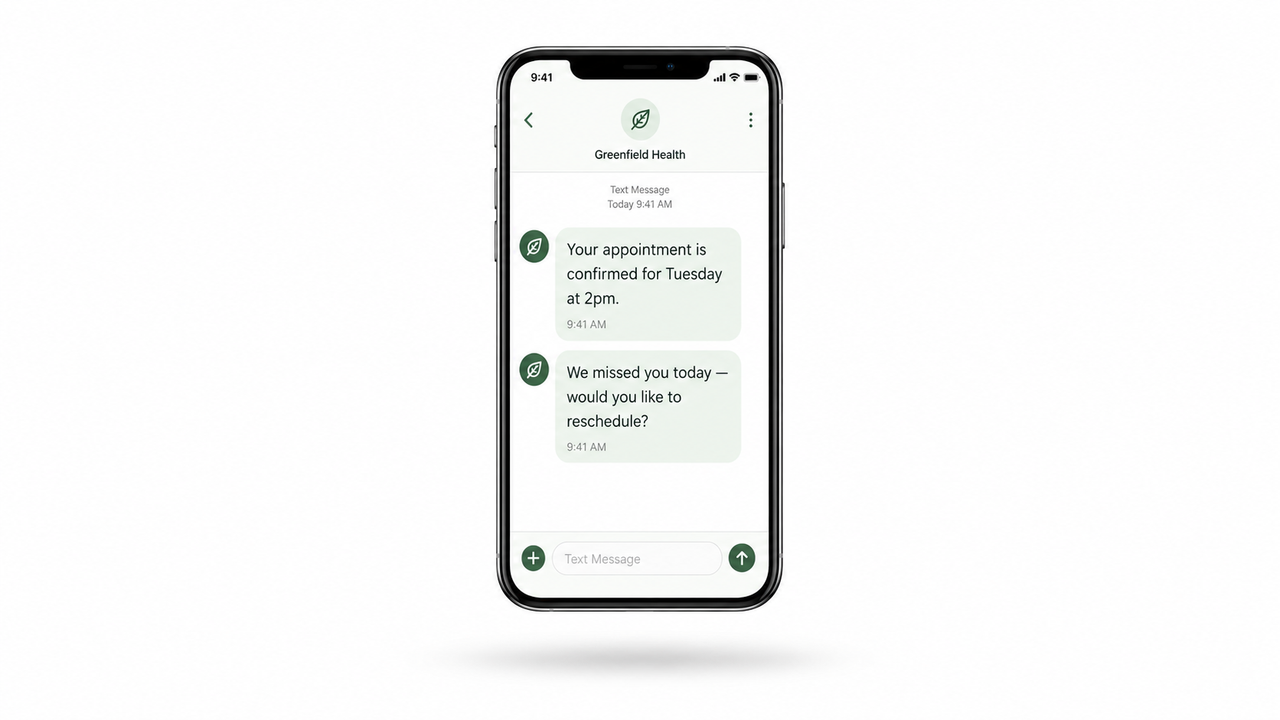
Missed-call text-back, an AI receptionist for overflow, and a booking link in the auto-reply. Prospects who call at 7 p.m. rarely leave voicemail twice. Give them a next step that does not require waiting until morning.
Tagged

Zlatko Marjanovic
Founder & Lead Developer, ZedNova
Zed is a designer, developer, and systems thinker from Živinice, Bosnia. Over 10-plus years shipping products he has delivered more than 120 projects for clients across the United States.