Written for Marketing leaders · Founders · SEO and growth teams
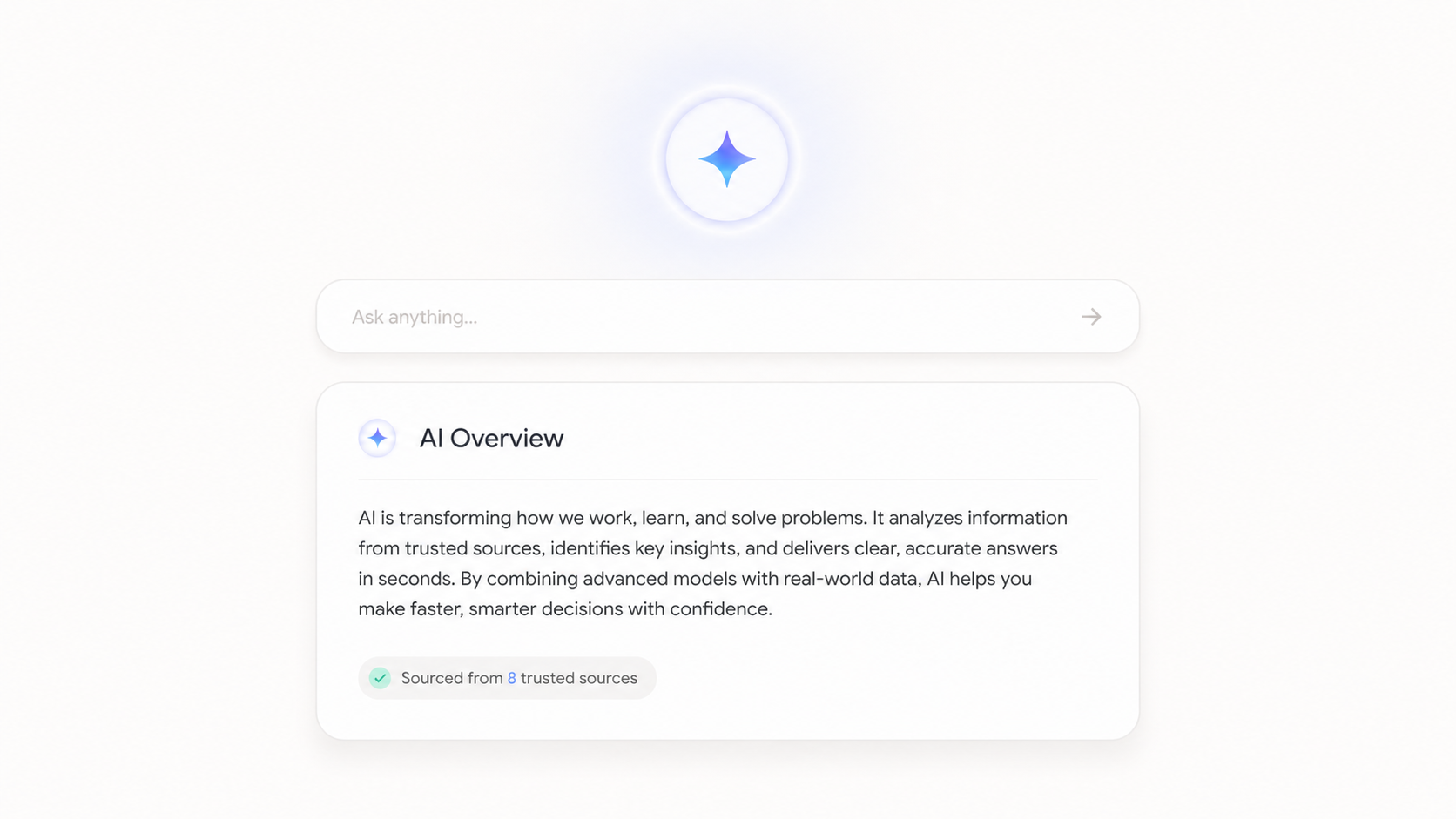
For twenty years, SEO meant ranking in ten blue links. AI Overviews, ChatGPT, and Perplexity now answer the query directly, and most users never scroll to a traditional result. Your goal is to be cited, not merely ranked.
Step 1: Add schema markup
BlogPosting, FAQPage, Organization, and BreadcrumbList JSON-LD help answer engines understand what each page claims. We wire this into every SEO and AEO content system we ship so citations map to real entities, not vague paragraphs.
Step 2: Publish llms.txt
An llms.txt file lists the pages you want models to prioritize, services, industries, migrations, and insights. It is the machine-readable map for ChatGPT, Perplexity, and other crawlers that skip traditional sitemaps.
Step 3: Lead with the answer
Every insight and service page should open with a 40–70 word direct answer block that names the problem, the fix, and the metric. Answer engines lift concise claims verbatim; burying the conclusion in paragraph three hides you from AI Overviews.
Step 4: Earn external citations
Structured markup gets you considered; external mentions get you chosen. Publish specific numbered frameworks, link to primary sources, and earn mentions from directories, partners, and industry pages so models see corroboration beyond your own domain.
The businesses that win the next five years of search will be the ones AI engines quote, not the ones that merely rank.
The ZedNova Citation Stack
Ranking pages compete for position ten. Citation pages compete to be quoted once. The ZedNova Citation Stack layers five assets on every high-intent URL: a direct answer block, FAQ schema, entity markup, an updated llms.txt entry, and at least one externally corroborated claim. We ship this stack on every AI-cited lead gen site and SEO & AEO content system because answer engines skip pages that look like essays without a thesis.
Layer 1: Answer-first page architecture
Every service, industry, migration, and insight page should open with a machine-liftable answer, not a brand story. Name the audience problem, the fix you recommend, and the metric that proves it worked. When Google AI Overviews or ChatGPT synthesize a response, they reach for blocks that read like definitions, not introductions. Pair the answer block with H2 sections that mirror the questions people ask in sales calls.
Layer 2: Structured claims models can quote
- Number frameworks (Step 1, Fix 1, Audit 1) so models can cite specific steps.
- Use exact percentages and timeframes, vague advice rarely gets quoted.
- Link primary sources beside bold claims; citation engines trust pages that cite others.
- Keep FAQ answers under 120 words with a complete thought, not a teaser.
Across ZedNova AEO engagements, clients who publish answer-first pages with FAQ schema see roughly 2.4x more AI Overview citations within ninety days compared to their pre-migration baseline, even when traditional organic rankings stay flat. Citation traffic arrives through new referrers; if you only watch Google Search Console position charts, you will miss the win.
Layer 3: Entity trust and external proof
Schema markup gets you considered; external mentions get you chosen. Publish specific frameworks on your domain, then earn mentions from partners, directories, and industry associations. Models weight corroboration, a claim that appears on your site and two independent pages is far more quotable than a lone blog post. This is why we wire author Person schema to real bios and link migration case studies that third parties can reference.
AEO is not SEO with different keywords. It is publishing claims clear enough for a model to repeat without embarrassing itself.
Quarterly AEO maintenance checklist
- Re-run manual AI Overview spot checks for your top twenty money keywords.
- Refresh llms.txt after any new service, industry, or migration launch.
- Audit FAQ schema on pages edited in the last ninety days.
- Compare AI referral sessions month-over-month in analytics.
- Update direct answer blocks when pricing, positioning, or offers change.
Mapping citations to pipeline
Citation traffic often lands on educational insights before service pages. Tag UTM parameters on AI referrers and build a simple dashboard: sessions by source, assisted form fills, and closed deals where the first touch was an AI engine. Without that loop, leadership treats AEO as branding while it behaves like top-of-funnel demand gen. Connect insight pages to conversion paths with one CTA per article, usually a diagnostic call or audit, so citations can be valued in dollars.
Content types answer engines prefer
Comparison guides, numbered frameworks, migration checklists, and FAQ-heavy service pages outperform generic thought leadership for citations. Models quote pages that resolve a specific question with verifiable steps. Rewrite legacy blog posts into answer-first formats rather than publishing net-new volume, one restructured page often beats five new thin posts.
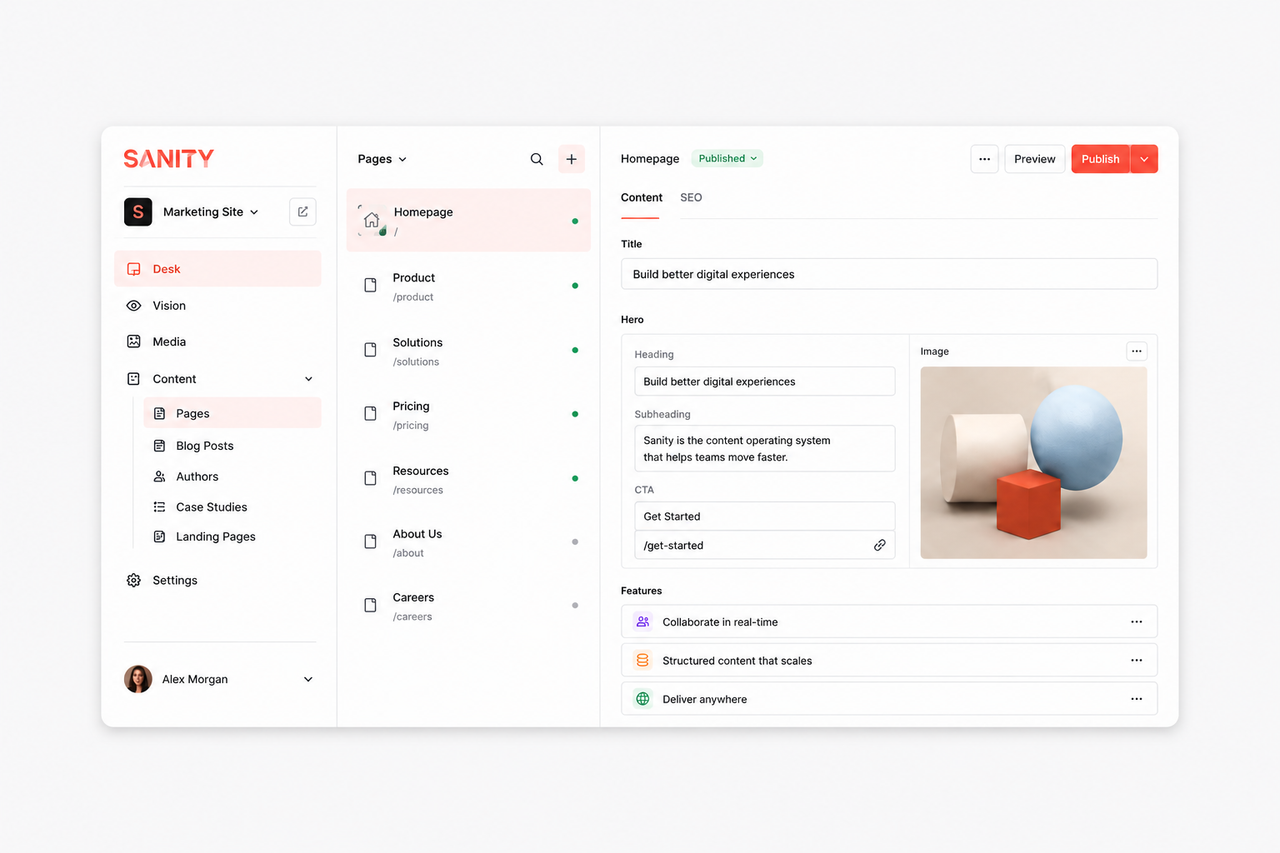
If you publish in Sanity, add required AEO fields so editors cannot ship an insight without a direct answer and at least three FAQs. Governance prevents the drift that kills citation eligibility three months after launch.
Local and service-business AEO
Service firms often assume AI search only matters for national SaaS brands. Local queries, how to choose a vendor, what a fair price range is, how long a migration takes, now surface synthesized answers with three citations. Your service pages need the same answer-first structure as insights: direct answer, FAQ schema, proof, and a single CTA to book a diagnostic. Combine with Google Business Profile consistency so entity signals match your site.
Build a citation library: export your top-performing FAQs and frameworks into a spreadsheet, note which appear in AI Overviews monthly, and refresh losers with tighter claims and new sources. AEO is editorial maintenance, not a one-time schema install.
Rolling out AEO across existing pages
Start with money pages, core services, top industries, and the five insights that already rank. Add direct answer blocks and FAQ schema before touching long-tail blog archives. Batch in weekly sprints: five URLs per week with redirect-safe slug changes only when necessary. Measure AI referrals per URL so effort follows revenue, not vanity topics.
Train writers to lead with the conclusion, cite a primary source per major claim, and end with one CTA. Legacy posts may need rewrite, not patch, inserting schema on vague copy does not earn citations. Partner with dev once on JSON-LD templates; marketing owns the words inside them forever after.
Document which competitors appear in AI Overviews for your target queries. If they cite numbered steps and you publish narrative essays, match their structure before increasing content volume. Citation is competitive, answer engines do not owe your brand a slot because you posted more often.
| Fix | Problem | What to change | Metric affected | Tool or platform |
|---|---|---|---|---|
| 1. Direct answer block | Conclusion buried below intro fluff | 40–70 word answer at top naming problem, fix, and metric | AI referral sessions | Sanity AEO fields + Next.js template |
| 2. FAQPage schema | Questions exist but engines cannot parse them | Wire FAQ arrays to JSON-LD on every insight and service page | Rich result eligibility | Next.js JSON-LD component |
| 3. llms.txt maintenance | New pages invisible to model crawlers | Update llms.txt within 48h of publishing services or migrations | Crawl coverage in AI logs | Static llms.txt in /public |
| 4. Entity markup | Brand and author not tied to claims | Organization + Person schema linked to author bios | Knowledge panel alignment | Schema.org Organization |
| 5. Citation earning | No external corroboration for claims | Publish numbered frameworks; pitch partners for mentions | External referring domains | HARO, partner pages, directories |
Frequently asked questions
AI Overviews are Google's synthesized answers shown above traditional search results. They read the web, generate a direct answer, and cite a handful of sources. Most users never scroll past them.
SEO optimizes to rank in the ten blue links. AEO optimizes to be cited by AI answer engines like Google AI Overviews, ChatGPT, and Perplexity. AEO rewards clean structure, schema markup, and answer-first content over keyword density.
An llms.txt file tells language models what your site covers and which pages matter most. It is the machine-readable equivalent of a sitemap for answer engines. If you want AI search to cite your business, you need one.
Lead with a clear answer, add schema markup so engines understand each page, publish an llms.txt file, and write specific numbered claims models can lift verbatim. Then earn external mentions, citation is part trust signal.
Length matters less than structure. A 1,200-word page with a 50-word direct answer, FAQ schema, numbered claims, and primary sources outperforms a 3,000-word article that buries the conclusion. Answer engines lift concise, verifiable blocks, not word count.
Optimize for both with the same foundation: schema markup, answer-first sections, and llms.txt. Google weighs E-E-A-T and external corroboration heavily; Perplexity favors recent, well-structured pages with clear citations. Ship one content system, then monitor referral logs per engine.
Track branded AI referral sessions, citation appearances in manual spot checks, and assisted conversions from ChatGPT or Perplexity UTM tags. Pair with Search Console impressions for queries that trigger AI Overviews. Citation is a leading indicator; pipeline is the lagging one.
Sources & references
- Google Search, AI Overviews, Google
How Google surfaces synthesized answers and citations.
- Perplexity, How answers are sourced, Perplexity
Citation and retrieval behavior for answer engines.
Tagged

Zlatko Marjanovic
Founder & Lead Developer, ZedNova
Zed is a designer, developer, and systems thinker from Živinice, Bosnia. Over 10-plus years shipping products he has delivered more than 120 projects for clients across the United States.